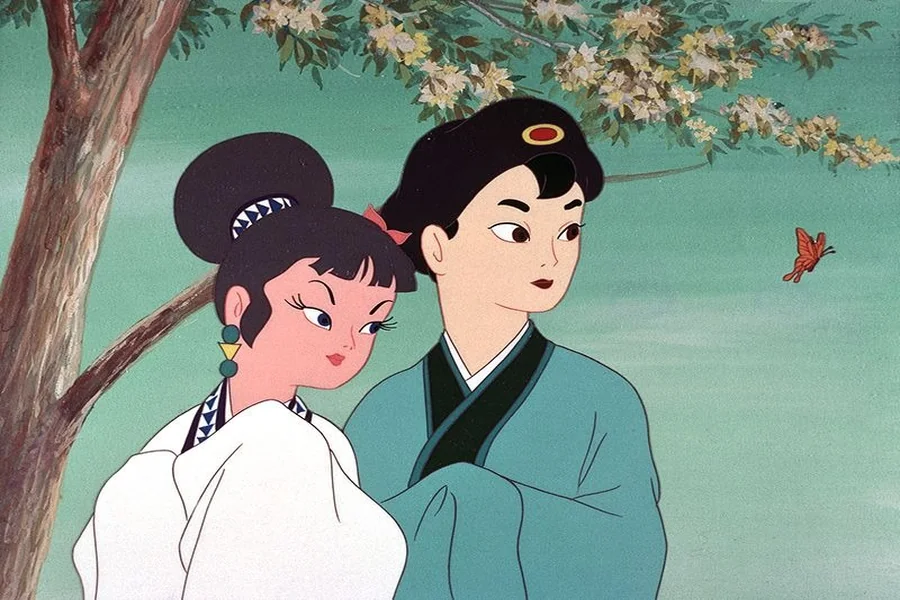
Anime, a captivating and diverse form of animation, has become a global phenomenon, captivating millions worldwide. But where did anime originate? To answer this question thoroughly, we need to trace the origins, development, and cultural influence of anime, from its roots in Japanese history to its current status as a dominant force in global entertainment.
The Roots of Anime: Early Beginnings in Japan
Anime, as we know it today, evolved from early forms of Japanese art and entertainment. However, its origins can be traced back to the late 19th and early 20th centuries when Japan was exposed to Western animation techniques. The first instances of animated films in Japan emerged in the early 1900s. These films were heavily influenced by both Japanese traditional art forms and Western animation, paving the way for the creation of a distinctly Japanese style of animation.
In 1917, Jun”ichi Kōuchi and Seitaro Kitayama, two pioneers in Japanese animation, helped produce some of the first anime films, such as Namakura Gatana (The Dull Sword), a short film regarded as one of Japan’s first examples of animation. This period marked the humble beginnings of what would later evolve into a major global industry. Early Japanese animations were heavily inspired by ukiyo-e (woodblock prints) and other traditional art forms that had been part of Japanese culture for centuries.
The 1930s to 1940s: The Rise of Japanese Animation
The period between the 1930s and 1940s witnessed the development of anime as a form of entertainment in Japan. During this time, Japan’s animation industry was shaped by both international influences and local traditions. The rise of Western cartoons, particularly from Hollywood, inspired Japanese filmmakers to experiment with animation techniques. Despite the global dominance of Western animation, such as Disney’s Mickey Mouse and Popeye, Japanese animators began incorporating distinct artistic and narrative styles that resonated with local audiences.
In 1933, Osamu Tezuka, the future godfather of anime and manga, was born. Tezuka’s Astro Boy (Tetsuwan Atomu), released in 1963, would later define the anime genre and set the stage for anime as we know it today.
During World War II, Japanese animation took a sharp turn, with government-funded propaganda films becoming the norm. The Japanese military and government realized the power of animation in influencing public opinion, and films such as Momotaro: Umi no Shinpei (Momotaro: Sacred Sailors), created by Miyazaki’s later mentor Kenzo Masaoka, were produced to bolster national pride. This form of animation, however, was short-lived as Japan emerged from the war in 1945.
Post-War Era: The Birth of Modern Anime
The post-war period marked the true birth of modern anime. In the 1950s, Japan’s economy was recovering from the devastation of World War II, and the country was beginning to rebuild. Osamu Tezuka, influenced by Walt Disney’s work, revolutionized the world of anime and manga. Tezuka’s Astro Boy, which first aired as a manga in 1952, was the first major anime series aimed at a young audience. The show became incredibly popular and brought attention to anime as a form of entertainment for children. Tezuka’s innovative use of visual storytelling and character design became the blueprint for many anime series that followed.
By the 1960s, anime television shows such as Speed Racer (1967) began to gain traction outside Japan, marking the first instance of anime reaching global audiences. The popularity of these early shows fueled the rapid growth of Japan’s animation industry.
The 1970s: The Golden Age of Anime
The 1970s is often referred to as the “golden age” of anime due to the incredible development in both the quantity and quality of anime productions during this decade. It was during this time that anime shifted from simple children’s entertainment to more complex narratives that explored themes of psychology, philosophy, and social issues.
One of the most notable developments of this era was the creation of mecha anime. Mobile Suit Gundam, which premiered in 1979, was a groundbreaking series that introduced giant robots as central characters. This series not only became a major commercial success but also spawned a cultural phenomenon that would continue to evolve in the following decades.
Anime during the 1970s also became more diverse, catering to different demographics, including teenagers and adults. The shonen genre (aimed at young boys) became more prominent, as did shojo (aimed at young girls) with series like Sailor Moon emerging in the following decades.
The 1980s: The Rise of Anime as a Global Phenomenon
The 1980s marked the time when anime began to gain real traction internationally. Studio Ghibli, founded by Hayao Miyazaki and Isao Takahata, produced films like Castle in the Sky (1986) and My Neighbor Totoro (1988), which became immensely popular worldwide, establishing Japan as a major force in the world of animation. These films were not only beloved by Japanese audiences but also captured the attention of viewers in North America and Europe.
During this decade, anime films, such as Akira (1988) and Ghost in the Shell (1995), pushed the boundaries of what was possible with animation. These films explored dystopian futures, technology, and the complexities of human consciousness, paving the way for the cyberpunk genre in anime.
In addition to global distribution, the 1980s saw anime being recognized as an art form. This decade marked a turning point when anime films started to garner critical acclaim and find recognition at major film festivals worldwide.
The 1990s: Anime Expands to the West
By the 1990s, anime had firmly established itself in the West, with many anime shows being broadcast on American television networks. Popular series like Dragon Ball Z, Pokémon, and Sailor Moon captured the imaginations of young audiences across the globe. The increasing popularity of anime in the West led to a growing demand for manga (Japanese comics), with series like Naruto, One Piece, and Bleach becoming household names.
During this period, the anime industry also began to see the rise of subcultures such as otaku, a group of passionate anime fans who embraced Japanese culture and became an integral part of the international success of anime.
The 2000s and Beyond: The Globalization of Anime
In the 2000s, anime became more accessible than ever before, thanks to the rise of the internet and streaming platforms. Websites like Crunchyroll and Fumigation began streaming anime online, allowing fans worldwide to access the latest anime series without the need for traditional television broadcasts.
The 2000s also witnessed the rise of anime conventions, where fans could meet creators, voice actors, and other enthusiasts, further solidifying the global community of anime fans. The continued success of major franchises, such as Attack on Titan, Naruto Shippuden, and My Hero Academia, helped to cement anime’s status as a mainstream entertainment medium.
Today, it has evolved from a niche form of entertainment to a global cultural phenomenon, inspiring fans, creators, and industries across the world.
Conclusion: Anime’s Continuing Legacy
Anime’s origin in Japan, rooted in traditional art and influenced by Western animation, has grown into a global entertainment powerhouse. From its humble beginnings in the early 20th century to its modern-day status as a multibillion-dollar industry, it has impacted not only entertainment but also global culture. Its unique storytelling, art, and diverse genres have made it beloved by audiences of all ages around the world.