The Magical Girl Series That Redefined a Genre
Mahou Shoujo Lyrical Nanoha is a title that has captivated anime enthusiasts since its groundbreaking debut in 2004. Far from the traditional mold of magical girl series that prioritize sparkles and romance, this franchise pushed boundaries, combining emotional depth, high-stakes battles, and science-fiction elements with the core themes of friendship and courage. Over the years, it has developed into a vast multimedia universe, leaving a lasting imprint on the anime industry. In this comprehensive guide, we explore every aspect of this unique franchise to help you understand why it continues to shine in a crowded anime landscape.
The Origins of Mahou Shoujo Lyrical Nanoha
Mahou Shoujo Lyrical Nanoha originated as a spin-off from the visual novel Triangle Heart 3: Sweet Songs Forever, where Nanoha Takamachi was initially a side character. The decision to transition her into the lead role of her own magical girl series marked a daring move by creator Masaki Tsuzuki. Produced by Seven Arcs and directed by Akiyuki Shinbo, the anime aired in the fall of 2004 and soon gained a cult following.
What makes Nanoha’s origin story unique is how it embraced mature storytelling and high-intensity magical combat, unlike most contemporaries that focused solely on slice-of-life elements. This transformation of the magical girl formula was both bold and refreshing.
Plot Summary: A Journey Beyond Ordinary Magic
At the heart of Mahou Shoujo Lyrical Nanoha lies a compelling narrative about a seemingly ordinary third-grader, Nanoha Takamachi, who gets embroiled in a galactic crisis. After encountering an injured ferret-like creature named Yuuno Scrya, she learns of Jewel Seeds, powerful magical artifacts capable of causing catastrophic damage.
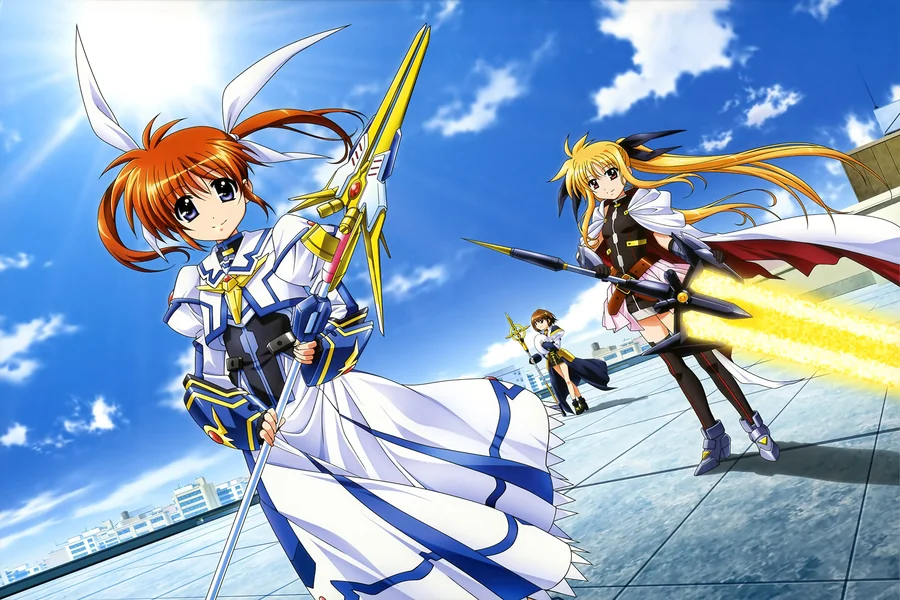
Nanoha becomes a magical girl by bonding with the intelligent device Raising Heart. As the story unfolds, Nanoha must collect the dangerous seeds before they fall into the wrong hands. Along the way, she faces formidable opponents, most notably Fate Testarossa, a rival who challenges not only her magical abilities but also her sense of justice and empathy.
What sets the series apart is how it delves into themes of trauma, parental abuse, and redemption, giving depth to characters that would otherwise fit simple archetypes.
Fate Testarossa: More Than Just a Rival
One of the most iconic characters in the series, Fate Testarossa, is far more than a typical antagonist. Introduced as a cold and distant magical girl, Fate’s tragic backstory quickly unfolds, revealing a tormented child suffering under the abuse of her mother, Precia Testarossa.
Fate’s complex relationship with Nanoha evolves from enmity to mutual respect and eventually, a powerful friendship that lies at the emotional core of the series. Their final battle in the first season is lauded as one of the most intense and emotionally charged duels in magical girl anime history.
Fate’s weapon, Bardiche, and her lightning-based attacks contrast beautifully with Nanoha’s beam-based arsenal, emphasizing their thematic differences. Her character arc exemplifies growth, forgiveness, and the strength of human connection.
Mahou Shoujo Lyrical Nanoha A’s: Raising the Stakes
Following the success of the original, the sequel Mahou Shoujo Lyrical Nanoha A’s aired in 2005 and is widely considered the franchise’s peak. It expands the universe significantly by introducing the Wolkenritter, a mysterious group serving the Book of Darkness and its master, Hayate Yagami.
A’s intensifies the narrative with darker storylines, more complex character motivations, and elevated battle choreography. The animation quality sees a noticeable improvement, especially during large-scale magical battles that push both character and viewer to emotional extremes.
By the end of A’s, the series solidifies its identity—not just as a magical girl show, but as a character-driven science-fantasy epic.
Mahou Shoujo Lyrical Nanoha StrikerS: A Time Skip and a Team
Set ten years after A’s, Mahou Shoujo Lyrical Nanoha StrikerS presents a dramatic shift in format. Nanoha, Fate, and Hayate are now young adults working for the Time-Space Administration Bureau (TSAB). They lead and mentor a new generation of magical users including Subaru Nakajima, Teana Lanster, and Erio Mondial.
This installment incorporates a militaristic structure, emphasizing teamwork and large-scale tactics. While it received mixed reviews for its pacing, StrikerS expanded the world-building and matured the themes of duty, leadership, and sacrifice.
Nanoha’s evolution from child to commander demonstrates the rare commitment of an anime to long-form character development over time.
Subsequent Installments: Vivid and Beyond
The franchise continued with series like Mahou Shoujo Lyrical Nanoha ViVid, focusing on Vivio Takamachi, Nanoha’s adopted daughter. ViVid explores a tournament-style format, emphasizing martial arts and hand-to-hand magical combat.
Films such as The Movie 1st, 2nd A’s, and Reflection provided high-budget reimaginings of earlier arcs with enhanced visuals and condensed storytelling. The 2017 release of Reflection and 2018’s Detonation introduced new characters like Iris and Amite, further expanding the lore.
Each installment maintains the balance of intense action, emotional storytelling, and high-concept magic that defines the Nanoha experience.
Themes and Philosophy: Friendship Through Force
Unlike traditional magical girl anime, Mahou Shoujo Lyrical Nanoha is known for resolving conflict through forceful confrontation, followed by compassion. Nanoha often defeats opponents with overwhelming firepower, only to offer them her friendship after the dust settles.
This theme—“befriending through battle”—might seem ironic, but it’s a recurring motif that emphasizes understanding through struggle. It also critiques surface-level solutions to deeper emotional wounds, suggesting that empathy must be earned through real confrontation of pain and truth.
The Technical Appeal: Devices, Magic Systems, and Sci-Fi Integration
A unique aspect of the franchise is its blend of magic and technology. Each mage uses a Device—a sentient weapon that supports spells, transformation, and communication. Raising Heart, Bardiche, and Graf Eisen are iconic examples, each with its own personality and function.
The magical system is structured around Midchildan and Belkan styles, each with distinct philosophies and techniques. Spells are rendered in visual glyphs, systemized like computer programs, reinforcing the science-fantasy fusion.
This technical complexity has attracted fans of mecha, fantasy, and hard science-fiction, setting it apart from genre peers.
Cultural Impact and Legacy
Mahou Shoujo Lyrical Nanoha has built a loyal fanbase worldwide. It influenced later works such as Puella Magi Madoka Magica and Yuki Yuna is a Hero, which also blend magical girl tropes with darker, more psychological themes.
Merchandise, manga, soundtracks, video games, and Blu-ray collections continue to sell actively, proving the franchise’s enduring commercial viability. Fan conventions and doujin communities still produce Nanoha-centric content, indicating its cultural longevity.
Final Thoughts
Mahou Shoujo Lyrical Nanoha remains one of the most transformative franchises in anime history. It challenges the notion of what a magical girl series can be, delivering intense action, emotional nuance, and philosophical depth. With its dynamic characters, innovative world-building, and fearless storytelling, Nanoha has earned its place among the greats. For those seeking a magical girl anime that defies expectations, this is not just a series—it’s a revolution in a pink dress, wielding a beam cannon.