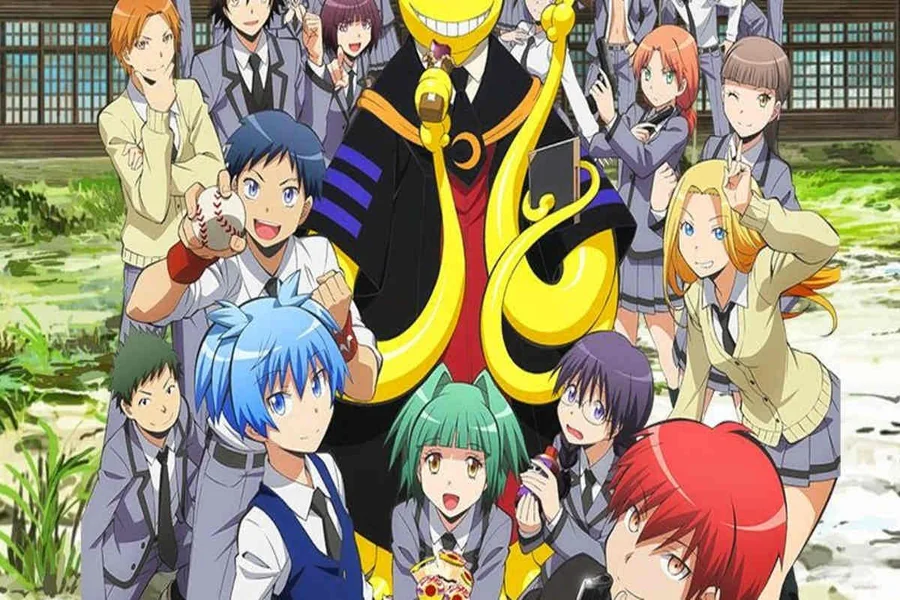
Anyone who loves anime knows the sheer rage of seeing a well-written, beloved character lose all their depth due to bad writing. Character assassination is when a character’s personality, motivations, or development are ignored in totality, re-imagined-out-of-existence, or otherwise undermined in favor of plot twists, fan service and/or pacing. It can tarnish a character’s legacy, and in the process, the saga as a whole.
In this special look, we’ll be taking a close at some of the nastiest character assassinations in anime and discuss why they happened as well as how they affected fans and worst off, the series itself.
-
Eren Yeager – Attack on Titan (Final Season)
Series: Shingeki no Kyojin (Attack on Titan)
Why It Hurt: Betrayal of the series’ moral complexity.
Eren Yeager began as a protagonist with an ambitious and reckless dream to destroy the Titans and free mankind. He was a complex character over his first three seasons. He grappled with morality, duty and the crushing weight of being humanity’s savior.
But in the final season, Eren went from a deeply flawed but empathetic hero to a cold, almost nihilistic extremist. This abrupt, poorly explainable shift struck many as a sour note. His evolution into a genocidal warlord was disguised as “freedom,” but the writing didn’t manage to reflect an internally logical journey. And rather than a subtle evolution, he became a mouthpiece for jarring plot twists.
Impact:
Eren’s arc was supposed to be tragic, but for a lot of fans it played like a betrayal of the complex character they’d been following all these years. His friendships with characters like Mikasa and Armin were compressed, leading to the polarizing ending.
-
Sasuke Uchiha – Naruto Shippuden
Series: Naruto
Why It Hurt: Repetition and illogical decisions.
Sasuke was originally a tragic figure driven by grief and vengence. It all made sense in early Naruto. But when he beat Itachi and learned the truth about the Uchiha, his character went off the rails. shifting allegiances with no actual buildup–vengence against itachi, murder konoha, worst character assassinations in anime, suddenly saving hte world to help naruto..
Worst of all, after the war he runs out on everyone again, saying it’s for “redemption,” regardless of the monstrous things he has done. His romance with Sakura seemed unnatural, considering the years of emotional abuse.
Impact:
Sasuke turned from a deep antihero into a walking mcguffin. Numerous fans believed his character arc was stretched and shoe-horned into a redemptive ending which did not match up with his actions.
-
Orihime Inoue – Bleach
Series: Bleach
Why It Hurt: Reduced to a damsel in distress.
Orihime began as a sweet and kind young girl with a brave heart. Her powers were distinct, capable of reworking reality itself. But, but then during the Arrancar and Hueco Mundo arcs, her character was nothing more than a whining victim.
She was just a plot device for Ichigo instead of growing her powers or character. Her stoic resolve from the first few arcs had disappeared, Worst Character Assassinations in Anime and her conflicted stoicism about everything was sidelined in favor of a vapid romance.
Impact:
One of the most frequently referred to examples of female character assassination in shonen anime is Orihime’s uselessness. Fans still argue over how strong she would have been.
-
Sakura Haruno – Naruto
Series: Naruto / Naruto Shippuden
Why It Hurt: Regression instead of growth.
Sakura first appeared as a balanced and intelligent kunoichi. Her insecurities and jealousies early on suggested that she was going to have a strong character arc. She also studied under Tsunade, another of the Legendary Sannin.
Yet instead of growing into a genuine rival for Naruto and Sasuke, she spent most of the series crying, lying to Naruto about her feelings and chasing Sasuke despite his lousy treatment. Her (varying) strength was presented in some battles but hamstrung by bad writing decisions.
Impact:
Sakura could have been one of the strongest female ninjas in shonen. Instead, she was the butt of fandom jokes, in large part because of uneven writing.
-
Gohan – Dragon Ball Z and Super
Series: Dragon Ball Z / Dragon Ball Super
Why It Hurt: Neglect of established potential.
Gohan’s takeover of the Cell Saga pleases to this day. He was the original one to reach Super Saiyan 2 and took up the mantle of Earth’s next defender. But post-Cell, his growth was reduced to the backburner.
And by Dragon Ball Super, he was a scholar who had trained so little for so long that he’d even lost his edge in fighting. Although some fans liked the gritty decision for Gohan’s character, most found it to be false with his previous resolution to protect his family.
Impact:
Gohan’s story is often referred to as anime history’s most tragic arcs, a case of truly poor planning causing the audience to lose all that they once loved about a character.
-
Lelouch Lamperouge – Code Geass R2
Series: Code Geass: Lelouch of the Rebellion R2
Why It Hurt: Contradictory behavior for shock value.
Lelouch is among anime’s best tacticians and morally ambiguous heroes. But in the second season, it felt like he was just pulling things out to make stuff happen in the story and less like strategic moves. He and Suzaku were maddeningly on-again off- again.
While the conclusion redeemed him in the eyes of many fans, R2’s middle portion is still seen as a point where character development was tossed out to make way for melodramatic plot-twists.
Impact:
Lelouch’s shabbier writing did not ruin his legacy, but it did result in one of the most controversial character arcs in anime history.
-
Mikasa Ackerman – Attack on Titan
Series: Attack on Titan
Why It Hurt: Flattened character in the final arc.
”Mikasa began as a strong, emotionally rich character. Her connection with Eren, identity crises and fighting prowess endeared her fans.
“But her character got put on ice in the last arc. Rather than playing out agency, she had none and now become completely about Eren. Her ultimate decision to kill Eren was intended to be empowering, but the arc that led up to it was too superficial for what it deserved.
Impact:
The “Eren is free” ending left many fans feeling that Mikasa’s character wasn’t given the independence and emotional stakes she deserved from the climax of this story.
-
Griffith – Berserk (2016 adaptation)
Series: Berserk (2016)
Why It Hurt: Mishandled adaptation.
The Griffith of the original Berserk manga and 1997 anime is one of the most complex villains in history. But the 2016 computer-generated imagery adaptation ruined his character with clunky animation, sluggish pacing and emotionless reading.
His cold-blooded mastery and charm were transformed into stilted optics and rushed plotting, undercutting the impact of one of anime’s most notorious betrayals.
Impact:
Manga weeps Fan of the manga were incensed, believing that the adaptation had murdered Griffith’s legendary spectra.
-
Asuna Yuuki – Sword Art Online
Series: Sword Art Online
Why It Hurt: From warrior to damsel.
Asuna’s initial appearance had her typed as a fierce independent woman who could hold her ground. She was a skilled SAO player and a dependable partner of Kirito’s.
But in the Fairy Dance arc, she had none of that agency. She wasted all of it trapped and waiting for Kirito to come rescue her. Later arcs would provide some redemption for her, but the damage had been done — her role changed from co-lead to love interest.
Impact:
The character assassination of Asuna is one of the examples most often mentioned as such in contemporary Anime with “how to sideline a strong female lead” being taken to domain level with it.
-
Near and Mello – Death Note
Series: Death Note
Why It Hurt: Rushed replacement after L’s death.
N (Near) a n d Mello w e re introduced after L’s death as his successor s. But their creation was rushed, and they didn’t have the charm, brilliance and depth that made L a fan favorite.
Near defeating Light wasnt earned in the least bit and came off like writers just wanted to finish this story fast. Neither character was terrible per se, but they were both poorly written and compared to the first half of the series.
Impact:
Death Note fans frequently argue that the story went downhill after L’s death, and, in a way, it comes down to Near and Mello never truly living up to their predecessor.
-
Ichigo Kurosaki – Bleach (Final Arc)
Series: Bleach
Why It Hurt: Power with no personality growth.
Ichigo is supposed to be this determined yet, relatively hero with obvious emotional conflict. But by the Thousand-Year Blood War arc, his characterization was simply one of unlocking new powers and less than meaningful development.
But instead of harboring some sort of emotional or mental growth, he was pulled from punch-up to punch-up with little in the way of navel gazing which all made him feel like a husk compared to his earlier self.
Impact:
Ichigo and the death of his cool This is one of the reasons fans started to get frustrated with Bleach in its later arcs.
-
Rem – Re:Zero (Season 2)
Series: Re:Zero
Why It Hurt: Removal from story.
Rem quickly became a fan favorite in Re: Zero for her loyalty, versatility and character development. But in Season 2, she was comad and otherwise written out of the story pretty early.
This doesn’t change as a character rewrite, but her total sidelining just felt like too great a disservice to both what she means and meant both for the original series and Subaru.
Impact:
Readers were also disappointed by how the departure of one of the most earth-shattering characters was left totally unexplained for easy plot purposes.
-
Kallen Kozuki – Code Geass R2
Series: Code Geass
Why It Hurt: Reduced agency in later episodes.
Kallen was introduced as a fierce fighter and revolutionary with her own convictions. However, due to the fact that as R2 wore on, she became little more than Lelouch’s/the world’s love interest.
But instead of fleshing-out her politics and interpersonal ethic, the writing relegated her to merely reacting to Lelouch’s dramatic strokes.
Impact:
Kallen was very much liked but many fans assumed she deserved a more critical arc.
-
Shouko Nishimiya – A Silent Voice (Koe no Katachi)
Series: A Silent Voice (movie)
Why It Hurt: Emotional flattening in the climax.
Shouko was superbly written throughout most of the film — gentle, multi-faceted, worst character assassinations in anime and filled with trauma. But in her climactic near-suicide and its aftermath, she felt hurried to a strange, incomplete place.
That’s not a full worst character assassinations in anime, but it was for many the point at which the film didn’t fulfill its promise to give Infinity War a sendoff — an arc in which she had no agency or any power to define what would happen to her after her death.
-
Shoto Todoroki – My Hero Academia (Later Seasons)
Series: Boku no Hero Academia
Why It Hurt: Neglected character growth.
No one cared about the little things, ones between him and Midoriya but focusing on Todoroki’s early backstory and development Is what made him one of the most interesting characters to watch in this series. But later he got stuck in his own personal état de stagnation. Rather than furthering his journey of trauma and identity, he became a side character with far less focus.
Impact:
Not destroyed, but Todoroki’s lack of any real development has been a source of frustration for fans who saw the potential for more.
Conclusion
Character assassination can occur for any number of reasons: rushed endings, shocking-for-the-sake surprises, production headaches or bad writing. What makes it particularly stinging is that mediocre stuff almost always happens to great characters with great potential.
From Eren Yeager’s sudden turn to Orihime’s squandered strength, these are all cases of botched writing that shattered fan trust and altered the legacy of cherished stories.
A good character is also written consistently (which means not every show remembers what they wrote six episodes ago), sees growth and respect what came before. When that’s gone, not even the most iconic figure is immune.
FAQs
Q1: What is character assassination in anime?
It’s when a character’s established personality, worst character assassinations in anime, goals, or values are abruptly changed or ignored, often damaging their arc.
Q2: Why does it happen?
Common reasons include rushed plots, inconsistent writing teams, trying to surprise viewers, or shifting focus to other characters.
Q3: Is every controversial arc a character assassination?
No. Some changes are well written and intentional. Character assassination occurs when the shift feels forced or contradictory.
Q4: Which anime suffered the worst character assassination?
Many fans consider Gohan from Dragon Ball and Eren from Attack on Titan as among the most disappointing.
Q5: Can a character recover from assassination?
Yes. Good writing in later arcs—or spin-offs—can sometimes redeem a mishandled character, though not always.